
 SEARCH

Bethany lives with Crohn's and developed perianal disease and a fistula in January 2018.
She tells us what impact this has on her life, the complications she has experienced, and her top tips for other people living with a fistula.
Bethany lives with Crohn's and developed perianal disease and a fistula in January 2018.
She tells us what impact this has on her life, the complications she has experienced, and her top tips for other people living with a fistula.
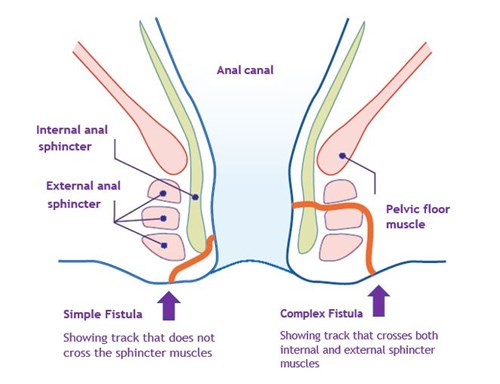
I would describe a perianal fistula as a tunnel that forms inside of your body and makes its way to your skin, causing a hole to appear.
The opening of a fistula will leak and if the hole closes or is blocked a build-up of pus will form and you will likely develop an abscess. This is a painful collection of pus, usually caused by infection.
In early January 2018 I started experiencing significant pain in my bum. I was not able to sit, walk or even lay down without being in severe pain and I was unable to eat or drink. As the pain got even worse, I decided to go to Accident and Emergency. At hospital I was told I had a very serious case of sepsis and a suspected perianal abscess that would require emergency surgery. An MRI confirmed this and I had emergency surgery that evening to drain the abscess which was ten centimetres deep. I remained in hospital for ten days receiving high doses of antibiotics to get the infection under control.
The abscess had not healed for many weeks and I needed daily visits to the urgent care clinic to dress and clean the wound. That was when we discovered I had a complex perianal horseshoe fistula that tracked all the way to my pelvic floor muscles. In June 2018 I had a seton placed to allow my fistula to drain and help it heal.
I think I ended up having about eight surgeries on my fistula over a period of two years.
Various surgeries included video-assisted anal fistula treatment (VAAFT) procedures. This is a little camera that cleans out the fistula track and allows doctors to see inside it. When laid open, fistula tracks often require an internal dressing, depending on how deep the wound is. This is changed daily and known as a pack. I found myself attending various walk-in clinics daily to get the packing done by a nurse. I found this aspect particularly gruelling as I was often attending a walk-in clinic at 7am and then doing a full day at work. This went on for months and months. I have also had to do this while being on holiday, trying to find a nurse abroad who can pack wounds.
I didn’t get a day off from my fistula!
In March 2020, my surgeon recommended I have a completion proctectomy (Barbie-bum surgery to some!). This would remove my rectum and, at the same time, they would remove the entire fistula track. My surgery was more complicated due to the fistula and the perianal sepsis I was still experiencing. I was warned that this would affect the healing of my perianal wound after I had my surgery.
It is so important that we speak about fistulas more.
Not a lot of people share their experience of living with one. I am sure that is because it is a bit of an embarrassing place to have something wrong, but we all have bums! I have felt embarrassed about my fistula in the past due to the drainage and fear of it leaking or smelling. This was a reality my life with a fistula. The fistula continues to affect my daily life even now it has been completely removed as it meant that my perianal wound has struggled to heal. I still experience pain and leaking from my wound, much as I did when I had a fistula. I have just started ustekinumab to help with the healing of my wound.
Despite the setbacks caused by my fistula I have still maintained and enjoyed a normal life.
I work full time and I’ve still enjoyed travelling abroad and doing all the things I usually do. Even with a fistula and the wounds that require daily packing. Yes, the fistula makes things a bit more difficult but I certainly don’t let that hold me back! I have learnt over the years what works for me and what doesn’t. Yes, there have been unexpected hospital stays and unexpected surgeries but I feel I must make the best of things. My friends, family and job are very supportive and I’m very lucky to have such a great support network around me
It is important to keep speaking about fistulas and the impact they can have on people who live with one. This way, we can raise more awareness and have better understanding of fistulas.
This page has been saved in your personal space. Go to “My Page” to view all saved pages.

We know it can be difficult to live with, or support someone living with these conditions. But you’re not alone. We provide up-to-date, evidence-based information and can support you to live well with Crohn’s or Colitis.
Our helpline team can help by:
Providing information about Crohn’s and Colitis.
Listening and talking through your situation.
Helping you to find support from others in the Crohn’s and Colitis community.
Providing details of other specialist organisations.
Please be aware we’re not medically or legally trained. We cannot provide detailed financial or benefits advice or specialist emotional support.
Please contact us via telephone, email or LiveChat - 9am to 5pm, Monday to Friday (except English bank holidays).
If you need specific medical advice about your condition, your GP or IBD team will be best placed to help.
Would you like to save the changes made to this page?
Your details were successfully saved.
